Total Sugars vs Added Sugars: Read the Two Lines Together
Understand total and added sugars on a US Nutrition Facts label, compare equivalent servings and avoid adding the same sugars twice.

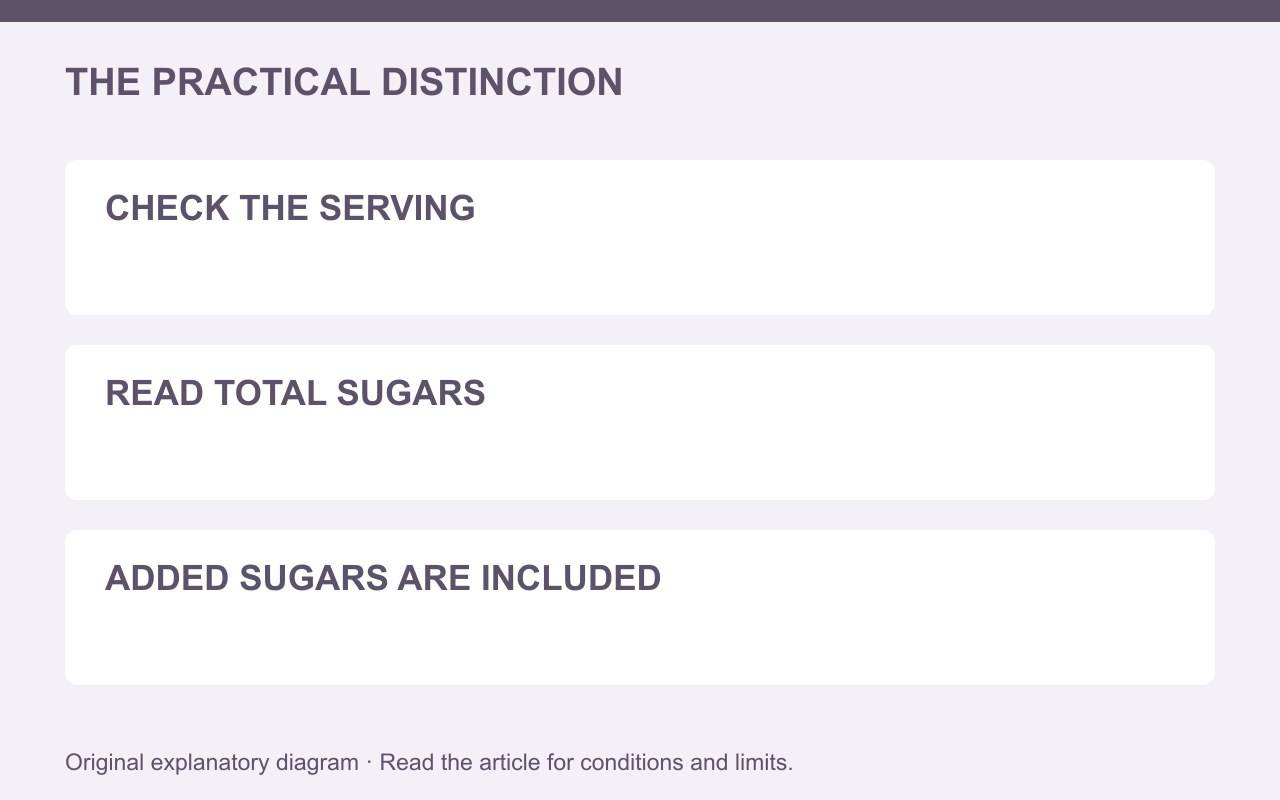
On a US Nutrition Facts label, total sugars and added sugars are related figures, not two amounts you should add together. Total sugars include both naturally occurring sugars and added sugars. The indented added-sugars line tells you how much of the total belongs to that added category. Start with the serving size, then read the two lines as one explanation.
What the two figures mean
FDA describes total sugars as including sugars naturally present in foods such as milk and fruit, together with any added sugars in the product. Added sugars include sugars introduced during processing, packaged sweeteners and certain sugars from syrups, honey or concentrated juices. The distinction concerns the label category, not whether a sweetener has a pleasant natural-sounding name.
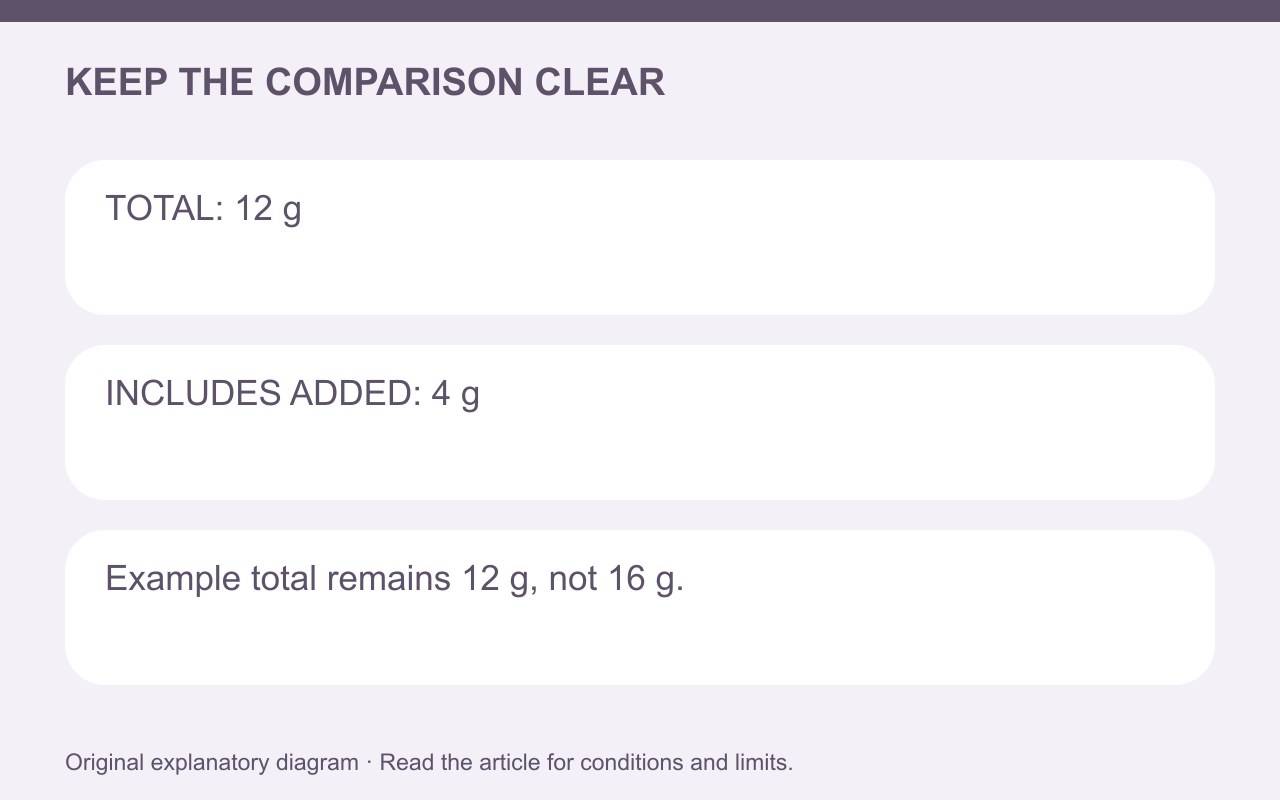
For example, imagine a label showing 12 grams of total sugars and “includes 4 grams added sugars” for one serving. The total is 12 grams. Adding the indented 4 grams again would count the same material twice. These are invented numbers for explaining the label, not a nutrient analysis of a product photographed for this article.
Establish the amount being described
Check whether the figures apply to a serving, the whole container or one of two columns. A comparison is less useful when one package describes a small serving and another describes a larger amount. Our serving-size and portion-size guide covers that distinction in more detail.
| Label question | Why it matters |
|---|---|
| What is one serving? | Defines the amount behind the printed figures. |
| How many servings are in the container? | Helps you interpret the amount you actually use. |
| What is the total-sugars figure? | Includes naturally occurring and added sugars together. |
| What does the added-sugars line say? | Identifies the added portion of that total. |
Make one calculation at a time. If the amount you eat is twice the stated serving, the relevant gram figures are doubled for that amount. This does not transform the label’s serving into a personal recommendation. It simply keeps the arithmetic connected to the food being discussed.
Use percent Daily Value as context
FDA’s reference Daily Value for added sugars is 50 grams on a 2,000-calorie daily diet. Its general label-reading guide describes 5% Daily Value or less per serving as low and 20% or more as high. Those reference points can help compare products; they do not mean that every individual needs exactly 2,000 calories or should aim to consume the full reference amount of added sugars.
The total-sugars line does not have a separate Daily Value on the US label. Do not interpret the absence of that percentage as an omitted added-sugars figure. Read the headings and indentation carefully, especially when a front-of-pack claim has drawn your attention to only one number.
Compare like with like
Choose two products used for a similar purpose and check comparable amounts. Record serving size, added sugars and another feature relevant to your choice, such as fibre. A product can differ in several ways at once. One smaller sugar figure cannot provide a complete nutritional assessment or tell you whether the food fits an individual medical plan.
If you are comparing yogurt, for example, distinguish what the label states from what you infer about the ingredients. Milk can contribute naturally occurring sugar, while an added-sugars line describes the added portion. There is no need to guess the split from taste alone when the relevant label provides it.
Keep the wider food decision visible
Consider the food’s role in the meal, affordability, preferences and any professional advice you already follow. Avoid sorting every food into a good-or-bad category from one line. The practical skill is understanding the information clearly enough to make a comparison, not turning a shopping trip into a test of perfect numbers.
This article concerns US Nutrition Facts labels. Other countries use different formats and definitions, so a package elsewhere may not show the same pair of lines. If you need an individual nutrition target, particularly for a medical condition, use qualified advice. For ordinary label reading, the reliable sequence remains simple: establish the serving, read total sugars, then recognise added sugars as part of that total.