Starting Strength Activity: A Beginner’s Planning Guide
Plan a gradual introduction to muscle-strengthening activity, choose suitable instruction and keep general activity guidelines separate from an individual exercise prescription.
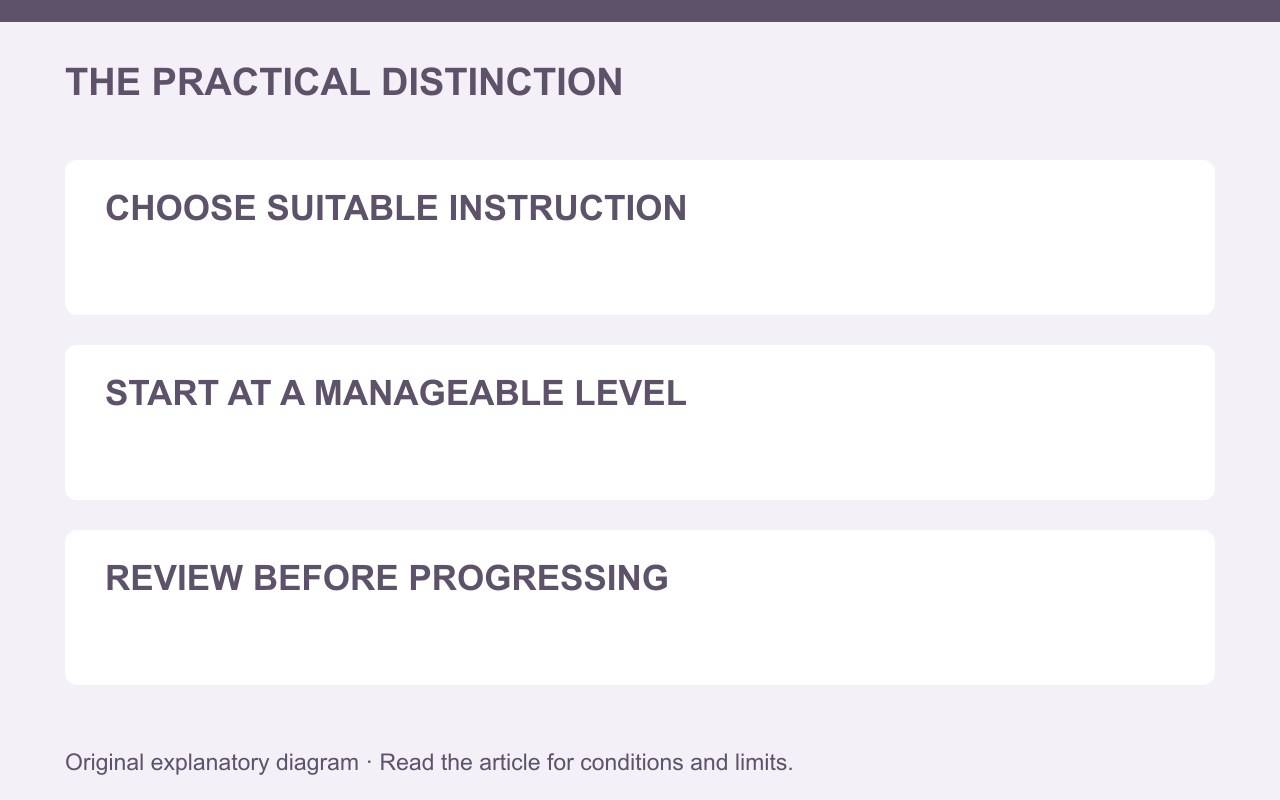
Beginning muscle-strengthening activity is a planning problem before it is an equipment problem. Choose an appropriate way to learn, set aside a realistic opportunity and start at a level that fits your current ability. General activity recommendations explain the direction of travel; they do not supply an individual exercise prescription for every body, health condition or previous injury.
Understand the role of strengthening
CDC’s adult guidance includes aerobic activity and muscle-strengthening activity on at least two days a week, involving the major muscle groups. Those recommendations describe a broader activity pattern. They are not an instruction for an inactive beginner to begin with the hardest routine that can be fitted into two sessions.
Strengthening can involve several forms of resistance, including appropriately chosen body-weight movements, resistance bands or weights. The useful question is whether an activity is suitable, understood and performed with control. Owning a particular piece of equipment does not establish any of those conditions.
Choose how you will learn the movements
Look for instruction appropriate to your needs. A qualified instructor can help you choose an entry point and understand technique, equipment setup and progression. If a health condition, disability, injury or uncertainty affects what is suitable, obtain guidance from an appropriate healthcare or exercise professional before following a generic routine.
Do not assume a short video is tailored to you because its title includes “beginner.” Check who it is for, what equipment it needs and whether the explanations are clear. You should be able to understand the setup and the intended movement without rushing to keep up with an edited demonstration.

Make the first commitment practical
CDC encourages starting gradually and building activity over time. An initial plan can focus on learning and establishing a manageable opportunity rather than maximising repetitions or load. Leave room for questions and adjustments. Progress is easier to judge when you know what you actually did and how it felt.
| Planning question | A useful answer to establish |
|---|---|
| Where will I practise? | A suitable space with stable equipment and enough room. |
| Who can explain unfamiliar movements? | A credible source of instruction or appropriate professional support. |
| What is my starting level? | An achievable level chosen for my abilities, not someone else’s demonstration. |
| What would make me pause? | Pain, feeling unwell or uncertainty about safe technique. |
Avoid adding more difficulty simply because a calendar says it is time. Learn what controlled performance looks like and use suitable guidance to decide when a change is reasonable. If something hurts or you feel unwell, stop and seek appropriate advice rather than treating discomfort as proof that the routine is effective.
Record a few useful details
A small log can contain the date, activities practised, the resistance or setup used and any question to ask before repeating them. Keep the language descriptive. “Unsure whether the band was secured correctly” identifies a problem to resolve; “bad workout” does not explain what needs attention.
This record is not a medical assessment or a competition with someone else’s progress. Its purpose is to help you repeat a suitable session consistently and communicate with the person supporting your activity. If tracking becomes discouraging, simplify it to the decisions that actually help.
Keep other movement in the week
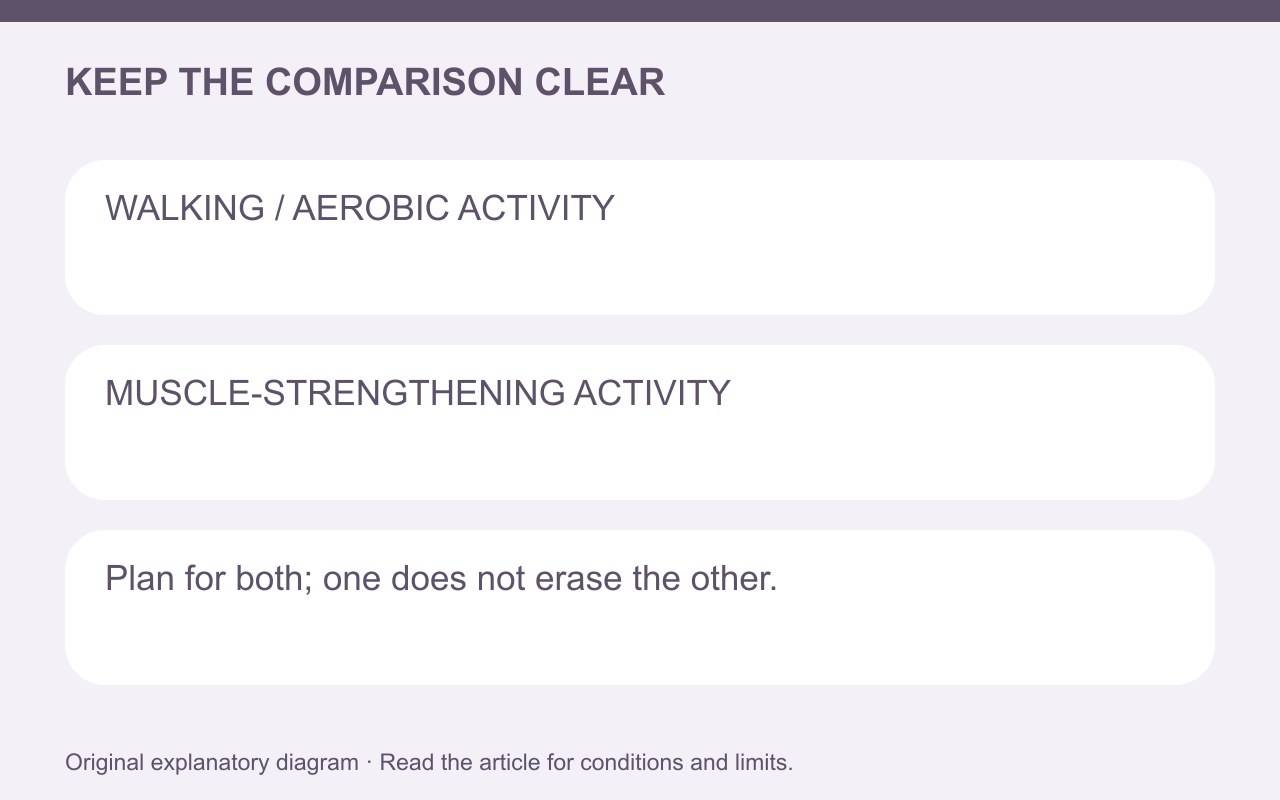
Strengthening belongs alongside, rather than automatically replacing, aerobic activity and other relevant movement. Our guide to walking breaks during a seated day addresses one different part of that pattern. A walk and a strengthening session can both be useful without being interchangeable in the guidelines.
Plan around ordinary constraints such as work, caregiving, access and recovery. If a session is missed, return to a suitable level rather than doubling the next one as a penalty. The aim is a repeatable practice that can be adjusted sensibly. Begin with clear instruction and a manageable starting point, then let progression follow ability and appropriate guidance rather than pressure to match an ambitious template.